Saturday, 27 October 2012

Ikebana 2

During my second Ikebana class, I practiced Shaseitai Aidome and Useitai arrangements learned during my previous lesson, only with different matierials. I'm slowly gaining a better grasp of the concept of less is often more in Japanese flower arrangement ( at least this seems to be the case for the styles I've thus far learned).

Today my sensei, fellow classmate and I also looked at some photos from last year's cultural festival to get ideas for the types of arrangements we'll be displaying in December. It sounds like I'll be arranging a Heika arrangement using plum blossoms and camellia (or something similar). I'm so looking forward to being able to participate in this local event and part of me already can't wait until December!   


Heika:
Shaseitai Aidome

Materials used:

Marigold
Monkey Cedar

This arrangement is similar to the one I did last month with the pink lilies. Its supposed to be one of the easiest to arrange, yet it still seems like the one I have the most trouble with   (>.<) I almost didn't want to post this picture!


Moribana:
Useitai  
 Materials Used:

Yukiri
Gentian
Chrysnthemum
Eucalyptus

Again, the same style as the moribana arrangement I did last month. There were a few key aspects I needed to review. I think I have it down now. As much as I love the smell of large Chrysanthemums, I find this month's colours and materials much more appealing. This style of moribana is also quite basic but its a lot of fun to arrange.


Heika:
Oseitai Yokodome
Materials used:

Japanese Hemlock
Marigold

This style is simple but interesting. The use of vertical line makes for an eye catching arrangement. I love the way the vivid colours of the marigolds contrast with the dark branches of the hemlock. I especially love the added cuteness of the little pine cones! This is my favourite arrangement so far :)

Friday, 26 October 2012

Harmony, Respect, Purity, and Tranquility

My Sado supplies
Harmony, respect, purity, and tranquility. According to Sen Rikyu, this is the spiritual code of the way of tea. Recently, one of my students kindly introduced me to his mother's former tea ceremony student, who is now a tea ceremony teacher herself. After having an extremely positive first meeting and sample lesson I've decided to continue to meet with her on Tuesday mornings. Having zero background knowledge of tea ceremony (aka Sado, Chado, or Chanoyu) and what it involves, I had little idea what to expect when I headed out for my first lesson. It turns out I was quite taken by my first experience.

Sado is much more than the act of drinking and enjoying tea. It incorporates many aspects of Japanese traditions and culture, and places emphasis on the appreciation of natural beauty in the surrounding environment, be it the tearoom or an outdoor setting. Tea ceremony encompasses an appreciation for the whole process of preparing, serving, and enjoying tea and okashi (accompanying sweets - more on this later). This includes taking the time to appreciate the the surrounding environment of the tea room, the decorations chosen by the host to reflect both the season and their consideration for their guest's tastes, and the utensils used to prepare, serve, and enjoy tea. In fact, from what I've thus far absorbed, the act of drinking the tea is but a small aspect of the tea ceremony experience.

In order to supplement some of the finer details that I'm sometimes unable fully grasp during my lessons (my sensei only speaks to me in Japanese), I've been reading some texts my Sensei lent me. They cover both the required steps and procedures, as well as the history of Sado. While I'd been under the initial assumption that tea ceremony was traditionally a woman's calling, I've learned that it had been predominantly practiced by men for hundreds of years, and it wasn't until after the war that tea ceremony became more comonly practiced by women ( I read a statistic that claimed about 80% female to male practitioners world-wide). Initiated by Zen monks, Sado was later picked up by the upper class in later years, followed by wealthy merchants and nobility further on, and finally spread to common people in more recent times.

Shuko (also pronounced Juko) Murata, a widely influential figure in the history of Japanese tea ceremony who has been regarded as a major contributor to way in which tea ceremony is preformed today, claimed "once one enters the tearoom, any discrimination between oneself and others vanishes, the virtue of gentleness prevails, and a new mutual enjoyment can be found." I think this quote, although perhaps a bit lost in translation, has helped me to realize what the spiritual experience that is meant to accompany the tea ceremony is really all about. Unfortunately, right now I feel as though I'm too caught up in performing the necessary steps and procedures properly, which leaves me with little room to fully enjoy and experience the moment for what it is. I hope this is something that will come to me over time as I become more familiar with the practice and things start to feel more natural.

I just finished watching a really interesting episode of Mark of Beauty on NHK World that focused on Nodate - outdoor tea ceremony. It explained the importance of the thoughtfulness behind the choice of utensils and decorations used in tea ceremony and how these are to be chosen to reflect both the current season and the tastes of the guests. It also discussed how to incorporate integral pieces of the tea room to an out door setting. Nodate would be a great way to practice tea ceremony back home where it would be much more difficult to create a space that reflects the tea room atmosphere in my home.

Pictures to come!

Sunday, 21 October 2012

花の窟 錦の御幡献上行列


I was finally fortunate enough to take in a local Shinto festival this afternoon, right here in lovely little Arimacho. The festival began with a long parade which passed right by my place, toward Shichiri Mihama beach, just beyond Hana no Iwaya. The parade consisted of talented local performers wearing beautiful clothing from the Heian period who later performed Shinto songs, music, and dance at a small stage on Shichiri Mihama beach.


Although the festival only lasted a short time, it drew quite a crowd as this was the first time it had ever been held. I myself drew quite a bit of attention being the only white person to be found.  I was able to meet a few locals - a Kumano Kodo tour guide who turned out to be a former student from my school many years ago, and a Mie bus driver who was kind enough to help me search for some mochi (although advertised in the festival brochure, I was unable to find any ><) and brief me on meaning of some of the rocks and worshiped areas at the Hana no Iwaya Shrine. I also ran into one of my adorable kindergarten students who, being the wonderful student she is, pointed out to me that I was wearing black shoes in English. I was even interviewed by a reporter from NHK!! So who knows, maybe I'll be on tonight's six o'clock news...


After returning home, still disheartened at the lack of mochi and having at this point built up a massive craving, I broke down and made for the local Circle K for some mochi and green tea ice cream which I enjoyed on the beach once the crowds cleared. OK, so it wasn't lovingly prepared by hand in some elderly women's kitchen (the best kind of baking out there) but it still hit the spot :)


Tuesday, 9 October 2012

Quick trip to Osaka

This past weekend I took my first ever trip solo. It was a long weekend here in Japan because of 体育の日 Taiiku no Hi (Health and Sports Day) so I decided it was about time I take a trip to a bigger city. In short, Osaka was not what I expected... in a good way. The streets were clean, and it didn't have that smelly garbage smell that most North American, European, and Chinese cities I've visited have. All I could smell was karage this, or sweet baked  that. Despite the large crowds of people around Namba where I stayed, the people in Osaka didn't have that rushed, aggressive, get-the-fuck-out-of my-way attitude they seem to have back home. 

The Highlights


Highlight number one

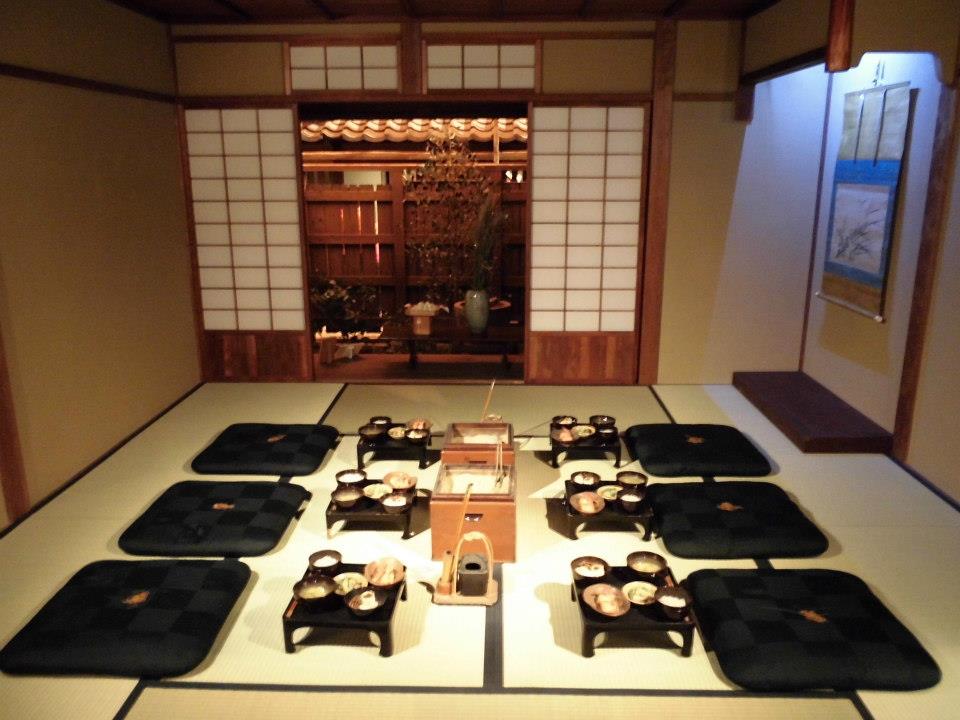
The highlight of my trip, although it may sound rather drab to some, was actually the time I spent at the Osaka Museum of Housing and Living. Lets face it, as I get older I'm developing a true love and interest in interiors and living spaces. You can bet I'll be the first creeper to peek inside your window when you leave the curtains open with the lights on at night...but I digress. The museum basically consists of a life size replica of Osaka's merchant and residential quarters during the Edo period. The best part was that this was an interactive museum where visitors can actually walk around and inside the houses and shops and handle most of what can be found inside. What's more is the available option to rent wear traditional yukata while exploring old Osaka (something I will 100% be doing when I return in the spring with my Mom and Grandfather... whether they like it or not heheh). I loved every last bit of this place, from the beautiful materials used to build the homes, to the genius idea of having the lighting change based on weather and time of day... once again I bring you back to the RPG reference I made a few posts ago.

Highlight number two

The shopping. While I love the act of finding a treasure I truly love, I actually hate the process of shopping itself. That is until I hit up a few Osaka malls and department stores and found treasures and goodies at every turn. Why can't shopping in Canada be this wonderful? Perhaps its for the best...

Among the many places I was able to window browse, and of course make a few purchases, Doguyasuji (full of kitchenware), and a small little stationary shop just across the street from my hotel called U Arts that sold a tone of cat-related stationary and paraphernalia were my favorite finds.

The Downside

Downside number one

I made it to the Floating Garden Observatory at Umede Sky Building to catch a night-time view of the city from above. This in itself was not a bad thing. The view itself was absolutely stunning. What I didn't realize is that this was clearly a place for couples, and in fact Osaka has a reputation of being Japan's city of romance. I was the only solo wanderer in sight. Everywhere I turned there were happy couples, laughing, smiling, embracing, etc. And while this kind of activity would normally make me spew my lunch all over the carpet. This particular scenario in relation to my situation, hit a soft spot and made me feel like a lonely weirdo. That said, I didn't enjoy a lovely desert in the cafe as planned and booked it for a disappointingly not-so-good "banana fantasy" street crepe that I somewhat-enjoyed alone in the comfort of my hotel room. 

Downside number two

I tried to return to that cute little stationary shop I mentioned earlier to make a few purchases, but didn't make it back before closing (it was a Sunday after all). I will definitely be making a return trip.


As I was leaving Osaka I was overwhelmed by an intense sense of love for the city. I didn't want to leave, and for the first time I missed Toronto. That said, when I got back to Kumano and took a nice long walk along the Shichiri Mihama Beach, this feeling vanished just as quickly as it sprung upon me. I'm beginning to think there's nothing a little ocean-side stroll can't fix.

Sunday, 30 September 2012

I heart Ikebana!

Finally, my first ikebana class! I'd been anticipating my first lesson for nearly a month, and I wasn't the least bit disappointed. I am learning the Saga Goryu Ikebana style which originated at the Daikaku-ji temple in Kyoto. After about three hours of lessons, my teacher was kind enough to lend me some of her materials so that I could practice at home, so I spent the rest of my night practicing the various styles I learned in my room. While ikebana requires strong concentration, I find it to be quite relaxing and rewarding.
 .

Here's what I've done so far:

First arrangement:
Heika: Shaseitai Aidome
Matierals:
Camellia
Lillies
Statice

This is a standard arrangement. Regardless, I spent a lot of time working on and still feel like I'm missing something. I will be attempting this one again tomorrow >.<   Although few materials were used for this one, I think its simplicity It what makes it beautiful. Less is more!


Second arrangement:
Moribana: Useitai
Materials:
Camellia
Chrysanthemum 

Although a little more complicated, this arrangement was probably the most fun to arrange. Moribana is meant to depict natural scenery, so both the water used and the flower stands themselves become an important part of the arrangement since they depict the shoreline. The longer I have this arrangement display, the more peaceful it makes my room feel. Something about the still water...


Third arrangement:
Heika: Kenseitai Adaptation Arrangement


Matierals
Roses
Wisteria Branch
Cysus Palm

This one was fun because I had the chance to experiment with leftover materials. The aim of this arrangement was to incorporate the use of line (kiwifruit vines), surface (leaf) and mass (roses). I actually liked this arrangement better with the leaf removed but decided to keep it for the purpose of fulfilling the aim of unifying all three elements. Another case of less is more I suppose. 

A few interesting tips I learned today:
  • Flower stems are to be cut in the water to avoid contact between the air and the flower stem (we call this mizukiri). This helps the flowers last longer.
  •  It is better to break Chrysanthemum stems by hand than to cut them with shears because this allows them to absorb more water (Chrysanthemums only!)
  • Even numbers are to be avoided for the most part, odd numbers are celebrated in Japanese culture. 
  • It is very important to pay attention to the relationship between the role, placement, and direction of the materials in a given arrangement.
  • In the standard arrangements shown above, the longest branch (tai) should be one and a half times the length (tall vase) or diameter (tray) of the container used


I'm super lucky to have found such an passionate ikebana teacher who is just as enthusiastic about teaching me as I am about learning, and I already can't wait until my next lesson at the end of October! Hopefully with some more practice, I'll feel confident about displaying my work at the local cultural festival at the beginning of December v(^o^)/

Sunday, 16 September 2012

RPG

Now for an expression that comes from my ultimately nerdy core. The more time I spend in rural Japan, the more I feel like a character in an RPG video game. Juxtapositions of the old and the new, so many historical sites, beautiful parks, and drastic changes of scenery from mountains to forest to beaches and parks. I'm always exploring new places, seeing new things, and meeting and talking with local people using the little Japanese that I know. Not only that but get this, the shopping street in Shingu has outdoor speakers that play light jazz. So whether one is just on a stroll, running daily errands or just doing some leisurely shopping, there's always that comforting, small-town background music running in the background of daily life. (There is even a toy weapon shop just down the street from where I live, not to mention a hand full of item shops in the area, although I have yet to find an armory). I could go on, but enough about the RPG analogy.


How many people can say they get hugs after  they've finished a shift at work... well I can. Yesterday I got up bright and early to catch the train to Shingu for for three-hour private lesson... And it was so much fun! A morning full of sailor moon, bento, and games, dancing and laughs followed by a big hug when it was time to go... days like these make me think I have the best job ever!


Having made the trip to Shingu to work on a Saturday, I figured I'd best spend the afternoon visiting some of the city sites I hadn't yet had the chance to visit. Fist stop was Jofuku Park. Jofuku was a Chinese explorer who came to Japan during the 3rd century BC, and is said to have brought Chinese culture to Japan. A very friendly woman who tended the park offered me an information pamphlet and some shade to sit under while I read through. These kinds of small friendly gestures of hospitality are becoming more common the more time I spend here, and its these small interactions and experiences that can really make one's day. Overall, a small park but worth-while and very pleasant visit.


Next stop was Shingu Castle Ruins. I really wasn't sure what to expect in coming here. Many of the pictures I had seen before coming certainly did not do the place justice and while I wandered the old castle grounds I found that I too was unable to capture the essence of the beautiful ruins. They offered a quiet peacefulness and a fragrant woodland smell I haven't encountered elsewhere during my time here. In fact, I was only one of two people enjoying the place! Since all of the informational monuments were written in Japanese, I wasn't able to learn much about the history and significance of the monuments that were erected there. Despite this, the ruins offered a spectacular view of the Kumano River, and I was fortunate enough to catch a close up glimpse of a pair of Japanese golden eagles flying just overhead. Unfortunately I didn't have my camera out at the time and couldn't catch a photograph. Of all the places I've visited, this is certainly one that I most enjoyed. I dunno, there was just something about the serene atmosphere that really stuck with me. I'm going to make a point to return during the fall to check out the autumn leaves.

Hayatama Taisha Shrine
The last stop for the day was Hayatama Taisha Shrine, one of the three Grand Shrines of Kumano.  While the structures themselves are rebuilt every 20 years in Shinto tradition, the site itself dates back to at least the 12th century. The shrine is a place of warship to the Gods who descended to earth at a nearby location centuries ago. This was my first visit to one of the Grand Shrines of Kumano and I'm looking forward to visiting the other two. My day was not complete without a tasted of some Haagen-dazs murasaki imo (purple yam) Ice cream, which yes, tasted just like a purple yam in ice cream form. I'm not sure if I'll be having it again in the future...but the flavour was unique to say the least. Next stop Nachi Taisha!


Tuesday, 11 September 2012

that very noticeably awkward gaijin moment...

Today was a long, weird day. First thing's first, I broke a big, heavy, full-length mirror this morning. Not intentionally of course. It already had a forward-slanted lean going on. It sort of just suddenly fell forward and smashed into a million pieces...right before I had to leave for my first of many monthly kindergarten classes....

After some frustration and panic at the thought of spending the next seven years plagued with bad luck, and a mad rush of sweeping and vacuuming, I headed out to class. When I arrived a good 15 minutes early in order to get oriented, I was greated by a bustle of excited students "Sunny-sensei!!! Hello!!!" Then it happened, my first awkward gaijin moment, and probably not my last. A few of the friendly Japanese teachers approached me and tried to explain to me that I would not be teaching in the gymnasium (my regular classroom at the kindergarten) but that I would be teaching the students in their respective classrooms. Wakarimasendeshita... (I didn't understand). After a bit of awkward back in forth squabble, me in my most straightforward english and broken Japanese, and she in her polite, yet to me still unrecognizable Japanese, I finally came straight out with it "Sumimasen...nihongo ga wakarimasen." The phrase I hate to say, yet ironically I can now say it quite well... Long story short: She ended up calling my school director who then relayed the message that I would indeed be teaching students in their respective classrooms and not in the gymnasium.  This is not to say I haven't experienced any awkwardness or made some ignorant, culturally sensitive mistakes during my short time here. It was however the first time that I felt I caused a great deal of curfuffle over something so small and trivial. Thus, it happened. My first truely awkward gaijin moment.

On the bright side, there is a solution to this problem and it is surely preventable in the future. The answer: learn Japanese. Yes, for the most part I have been able to get by in these situations with what little Japanese I already know. Aside from studying text books and phrases, I had my first Japanese class last Monday and I'm already looking forward to the next :)